


The Roots of Black History Month: A Story Worth Telling Around Every Table
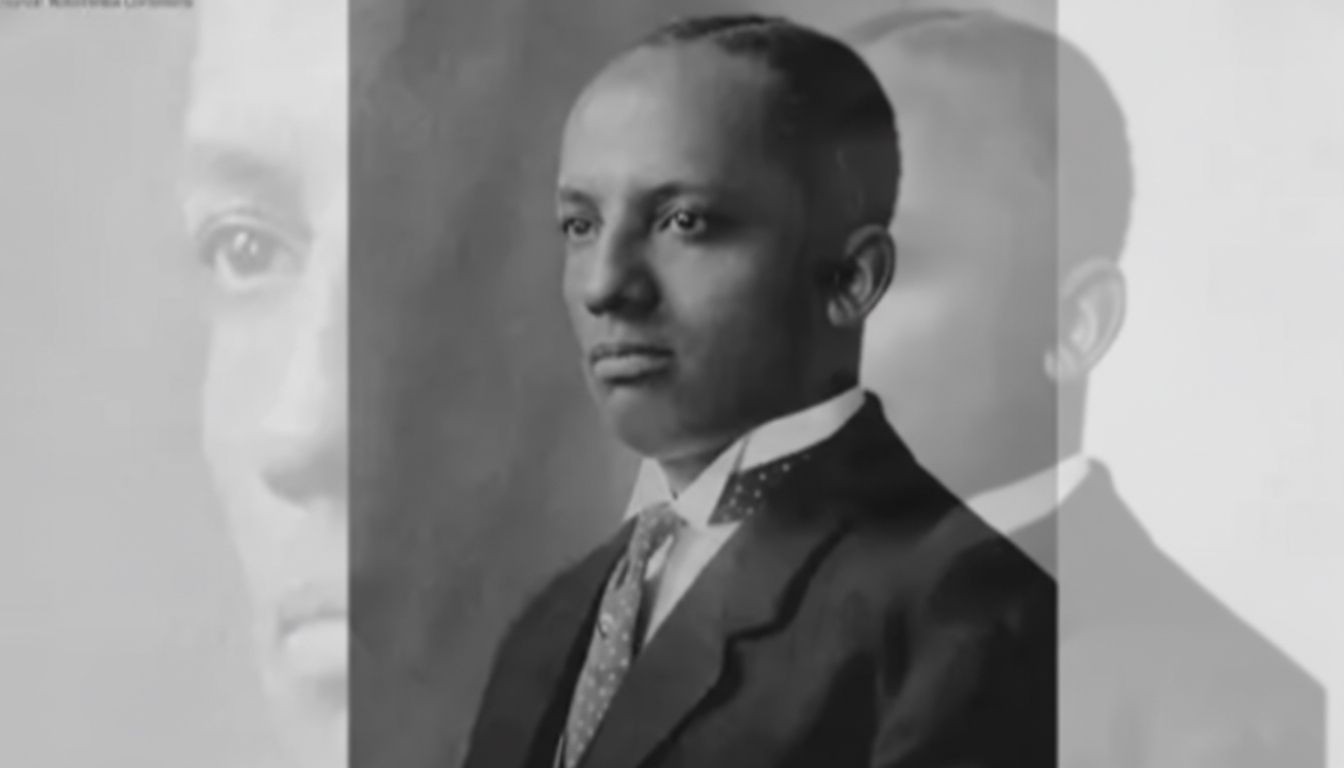
Every February, I see the tributes, the posters, the media spotlights, and the celebrations of Black excellence. Some years are more effusive, some are muted. But behind all of that, behind the month itself is a man with a vision so steady and so stubborn that it reshaped how America remembers its own story.
Carter G. Woodson didn’t come from privilege or power. Born December 19 th , 1875, in New Canton, Virginia to his parents James and Eliza Woodson. Both his parents had been enslaved.Carter G. Woodson grew up knowing firsthand how easily Black lives and achievements were overlooked or erased. Yet he pushed forward, working as a coal miner in Fayette County, West
Virginian because he could not afford to attend school full time. Dr. Woodson went off to become one of the first Black scholars to earn a Ph.D. from Harvard. That alone could’ve been the headline of his life. But Woodson wasn’t interested in being exceptional for his own sake. He wanted the world to understand that Black history was American history. A yearning shared by
many today.
When he later served as a dean at the historically Black institution of Howard University, he noticed something that gnawed incessantly at him. White academics were writing the story of America as if Black people had barely been there at all. No mention of the builders, the scientists, the artists, the inventors, the physicians, the soldiers, the everyday folks we know who shaped the nation in ways big and small. Dr. Woodson knew better, and he wasn’t about to let that stand.
So, he got busy in a good way and founded the Association for the Study of Negro Life and History. His mission was simple but bold: study, preserve, and share the truth about African American history. And in 1915, after attending the National Half Century Exposition and Lincoln Jubilee in Chicago, which was a massive celebration marking 50 years since Emancipation, Dr. Woodson felt a spark. Being surrounded by thousands of Black Americans honoring their progress, he saw what collective memory could do. It could heal. It could empower. It could change the future to move forward together.
That spark became Negro History Week, launched in 1926. Dr. Woodson chose the second week of February on purpose. It aligned most importantly with the birthdays of Abraham Lincoln and Frederick Douglass, two giants deeply respected in Black communities. The idea caught on quickly. The Pittsburgh Courier reported that the new celebration was welcomed across the nation. Schools, churches, and civic groups embraced it, and year by year, the week grew in influence underlined with promises not to forget its true meaning.
Bringing us forward to 1976. The country was celebrating its bicentennial, and the White House officially recognized Black History Month for the first time. President Gerald Ford encouraged Americans to “seize the opportunity to honor the too-often neglected accomplishments of Black Americans in every area of endeavor throughout our history.” In 1986, Congress made the
designation law.
Today, Black History Month is woven into the rhythm of American life. But it’s worth remembering that it didn’t start as a national observance. It started with one man who refused to let Black stories be forgotten. Dr. Woodson believed that if people truly understood the depth and breadth of Black contributions, it would transform how America sees itself.
And he was so right.
Let’s not restrict Black History Month to a calendar event, it’s a reminder to each of us to look deeper, listen closer, and honor the people whose stories built this country. It’s a chance to celebrate resilience, brilliance, creativity, and courage of your family, friends, neighbors and of yourself. It’s a call to keep learning and sharing not just in February, but all year long. Because the story of Black history is the story of America. And it’s a story we’re still writing together.
Must Read Newsletter
Sign up for news and events
Newsletter
Most Popular